
Ram Mating Period: Group Oestrus, Twinning and Proper Feeding
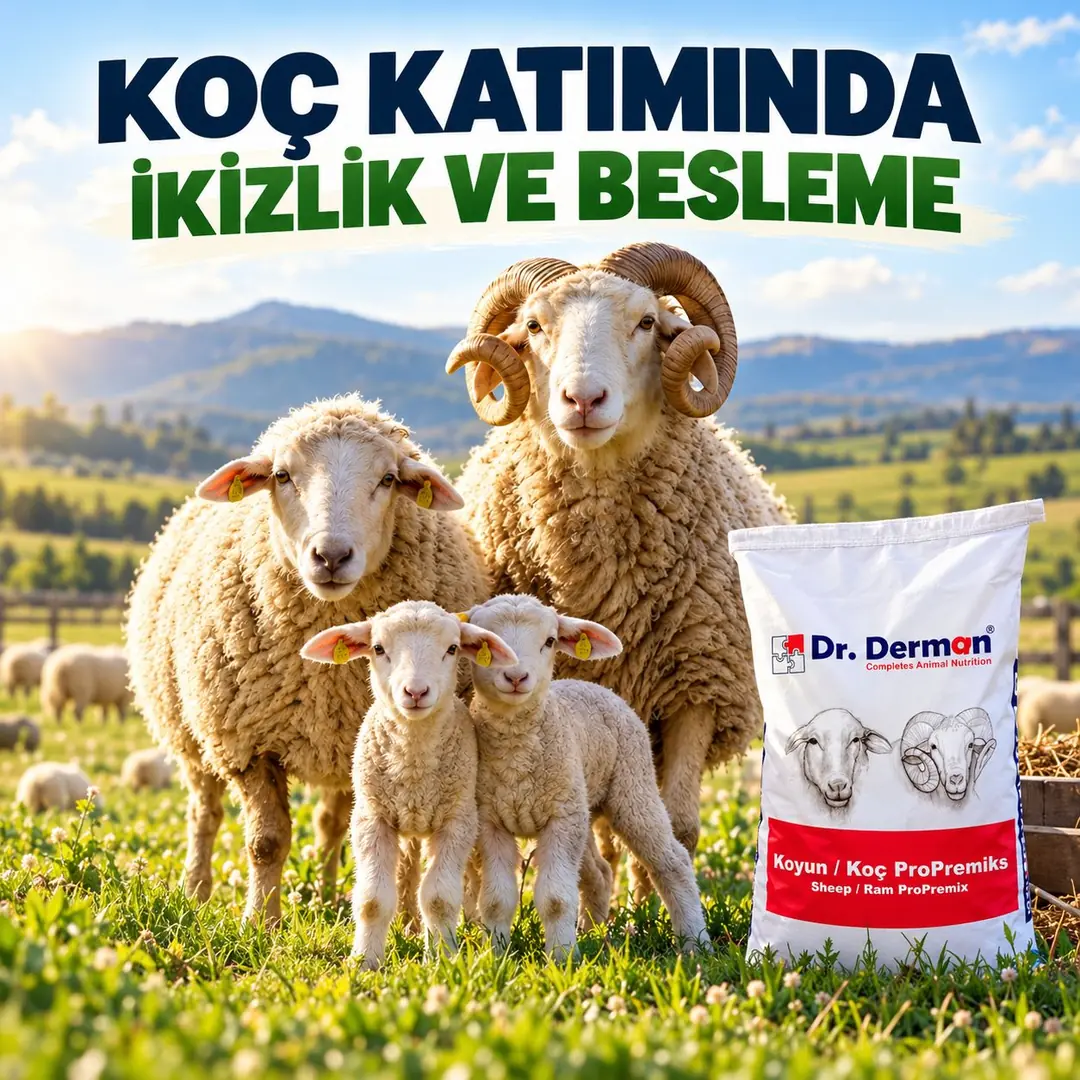
Ram mating is the most critical period in sheep farming that determines the rest of the year; ewes coming into heat at the same time ensures that lambings are concentrated in a single period and increases the profit per lamb.
Ram mating is not just about turning the ram loose into the flock. The ewe needs to show oestrus, conceive and start pregnancy healthily. It is also essential that the ram is in good condition in terms of libido and sperm quality. The preparation of both parties begins weeks before the mating.
In this article, I will explain step by step what you need to pay attention to during the ram mating period, why feeding is so important in ewes and rams, and how Dr. Derman Ewe – Ram ProPremiks is used during this period.
Preparation before ram mating: what needs to be done?
Preparation for a successful mating starts approximately 6–8 weeks before ram mating. Pay attention to the following points during this period:
- Condition score: Ewes should be neither too thin nor overly fat before mating. Oestrus is delayed in very thin ewes, while conception and twinning can be negatively affected in overly fat ewes. The target is moderate-to-good condition.
- Health check: Internal and external parasite control, necessary vaccinations, hoof care and udder check should be completed before mating. Healthy animals respond better to reproduction.
- Separation of rams and ewes: It is beneficial to keep rams away from ewes (without visual and olfactory contact) at least 3–4 weeks before mating. When rams enter the flock on the day of mating, oestrus starts more collectively. This is called the “ram effect”.
- Culling old and unproductive animals: Ewes with low fertility, udder problems or unhealthy conditions should be culled from the flock.
- Balanced ration: Energy, protein, vitamins and minerals should be considered together. Focusing solely on energy is not enough.
Why is synchronized oestrus so important?
If ewes come into heat in a scattered manner over a long period of time, lambings will also be spread over a long period. When one ewe conceives today, another in 15 days, and another a month later, the lambing season lasts for weeks.
The cost of scattered lambings to the enterprise is as follows:
- Labor and night watch duration increases.
- Lamb monitoring, vaccination and tagging become difficult.
- Age and weight differences among lambs increase; sales batches are not homogeneous.
- Barn hygiene and disease pressure persist for a long time.
When oestrus is synchronized, coming into heat concentrates in a period of about 1 month. Since the oestrus cycle in ewes lasts about 16–17 days, in a well-managed flock, the majority of ewes show oestrus within the first 17 days. If ewes do not conceive at this stage, they come into heat again in the second cycle; meaning a 35-day mating period offers a sufficient window for most flocks.
What does the twinning rate depend on?
Twinning depends on many factors such as breed, age, genetic makeup, ewe condition and nutrition during the mating period. Feeding is the area we can influence the most as an enterprise.
When the right energy support along with vitamin and mineral balance is provided before and during mating, it aims to support ovulation performance. Fertilization of more eggs and healthy implantation of embryos are important in evaluating the twinning potential. Remember: twinning increases profit per ewe, not per lamb; however, care of twin-born lambs must also be done more carefully.
Do not forget the rams!
A single ram is the father of many lambs; therefore, a reproductive problem in the ram affects the entire flock. A successful breeding season is not achieved only by preparing the ewes.
Sperm production takes about 7 weeks. Therefore, the current nutrition of the ram affects sperm quality 1.5–2 months later. Rams need to enter the breeding season in good condition and have vitamin and mineral support alongside energy in their rations.
Things to consider in ram management:
- Ram/ewe ratio: 5-7 rams should be targeted for mating in a flock of 100 ewes. This ratio may vary depending on flock size and terrain structure.
- Ram examination: Testicle structure, foot and leg health, teeth and general condition should be checked before mating.
- Backup ram: Keep at least one ram to replace a fatigued or injured ram.
- Supplemental feeding: Rams are more interested in ewes than eating during the mating period and can lose weight. Therefore, pre-mating condition is important; grain and premix supplements should also be provided during mating.
Vitamins and minerals for reproduction
Energy alone is not enough during the mating period; vitamins and minerals involved in reproductive functions must be present in sufficient and balanced amounts in the ration.
Add row aboveAdd row belowDelete rowAdd column leftAdd column rightDelete columnNutrientRole in reproductionBeta-caroteneContributes to ovary and corpus luteum functions; supports oestrus distinctnessVitamin AHealth of reproductive organs and embryo developmentVitamin E and seleniumAntioxidant protection; sperm and embryo quality, conceptionZincSperm production, hormone balance and health of reproductive organs
These substances are often insufficient in rations of dry grass, straw and crushed grain. Especially in roughage stored for a long time, beta-carotene and vitamin levels drop; selenium and zinc deficiency is observed in the soils of some regions. Therefore, adding a targeted premix to the ration for the mating period is a practical way to close the gaps.
What is Dr. Derman Ewe – Ram ProPremiks?
Dr. Derman Ewe – Ram ProPremiks is a special premix solution developed to support the nutrient needs of both ewes and rams during the reproductive period.
The beta-carotene, vitamins A and E, selenium, zinc and other important minerals it contains contribute to supporting reproductive functions and the general condition of the animals.
Benefits targeted with the product:
- Helps ewes come into synchronized heat.
- Effective in increasing the twinning birth rate.
- Increases sperm quality and quantity of rams.
- Increases the mating drive of rams.
- Increases the birth weight and survival rate of the born lamb.
- Increases milk yield and prolongs lactation duration.
- Supports health and welfare.
The most important feature of the product is that it prepares both ewes and rams for the breeding season with a single product.
How to use Ewe-Ram ProPremiks?
Usage lasts a total of 30 days: it starts 10 days before ram mating and continues for another 20 days after rams are introduced to the ewes.
Add row aboveAdd row belowDelete rowAdd column leftAdd column rightDelete columnPeriodDurationEwe (daily)Ram (daily)Before matingStart 10 days before mating100 g ProPremiks200 g ProPremiksDuring mating20 days after rams meet the ewes100 g ProPremiks200 g ProPremiks
The ration alongside Ewe-Ram ProPremiks should be as follows:
Add row aboveAdd row belowDelete rowAdd column leftAdd column rightDelete columnFeedEwe (daily)Ram (daily)Grain crush or flake600 g1 kg 200 gDry grass or straw1.5–2 kg1.5–2 kg
* This feeding is applied starting with the use of Ewe-Ram Propremiks and continuing until the 40th day after ram mating. Grain supplementation along with roughage feeding is done for a total of 50 days.
Practical tips:
- Thoroughly mix the premix with daily grain crush and put it in the feeder; leave sufficient feeder space so that each animal can get its share.
- To give rams their own dose, if possible, feed them separately before mating.
- Keep clean and fresh water available.
- Follow the storage and usage information on the product packaging.
Common mistakes in ram mating
- Starting feeding just before the mating day. The effect of feeding appears in a few weeks; start preparation early.
- Over-fattening ewes. Excess weight can negatively affect conception and twinning.
- Neglecting rams. Turning the ram loose into the flock is not enough; its condition and nutrition must also be planned.
- Keeping the number of rams too low. If a single ram is tending to too many ewes, mating remains scattered, and some ewes may remain without a ram.
- Skipping the health check. Deficiencies such as parasites, vaccines and foot health directly affect reproduction.
- Not keeping mating and lambing records. Knowing which ewe came into heat when makes it easier to plan the birth date and the following year.
Mating calendar example
Since the gestation period is about 150 days (5 months), plan the mating date according to the season you want lambing to occur. For example, mating in early October corresponds to births in March. Appropriate weather during the lambing period reduces lamb mortality.
Conclusion
The goal of many lambs starts not only with ram mating, but with the right feeding program applied before mating. In a flock where lambings occur synchronously, lamb tracking, feeding, vaccination and general flock management can be done much more systematically.
To prepare your flock strongly for the breeding season and support twinning potential, start using Dr. Derman Ewe / Ram ProPremiks 10 days before ram mating; you can contact us for proper preparation, synchronized ram mating and a strong lambing season. Create a short text for this blog post.